
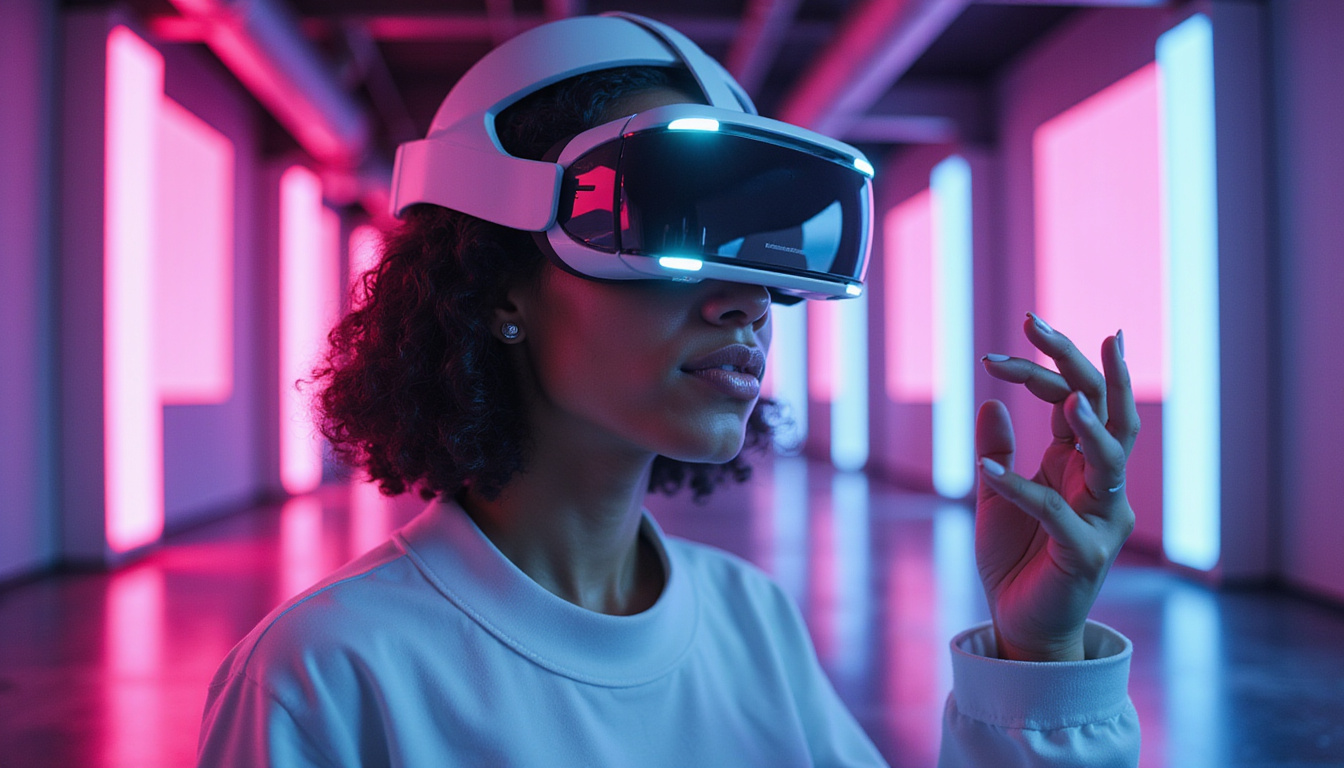
Embodied agents are transforming how people interact with digital systems by giving virtual characters a physical presence, expressive behavior, and context-aware intelligence. In the first 100 words it’s clear: embodied agents blend animation, speech, and AI to create interactions that feel natural, persuasive, and emotionally resonant — which is why they’re increasingly used to boost engagement across learning, customer service, healthcare, and entertainment.
What exactly are embodied agents?
Embodied agents are virtual or robotic characters that combine a visible body (2D avatar, 3D model, or physical robot) with conversational abilities, nonverbal cues, and task-oriented intelligence. Unlike text-only chatbots, embodied agents use gesture, facial expression, gaze, posture, and spatial behavior to communicate intent and emotion, making exchanges feel more like interacting with a person than with software.
How embodiment creates immersion and believability
Immersion stems from multimodal signals. When a virtual character nods while listening, maintains appropriate eye contact, or mirrors a user’s posture, people interpret those cues as social signals. That social presence increases trust, attention, and memory retention. Embodied agents leverage:
- Visual behavior: facial animation, lip-sync, gaze control.
- Vocal delivery: prosody, timing, and voice personality.
- Spatial behavior: approach/avoidance, distance regulation, and gestures.
- Context-awareness: adapting behavior based on environment and user state.
Research on virtual humans and social presence shows that realistic, timely social cues improve user engagement and learning outcomes (Stanford Virtual Human Interaction Lab: https://vhil.stanford.edu/).
Design principles for believable virtual characters
Creating a believable embodied agent requires more than high-fidelity graphics. Designers must align character behavior with expectations and context. Key principles include:
- Consistency: Personality, voice, and nonverbal behavior should match the agent’s role.
- Timing: Micro-timings for gaze, pauses, and gestures must mirror human conversational rhythms.
- Adaptation: The agent should sense and respond to user affect, language, and progress.
- Simplicity: Avoid overloading the user with unnecessary motion or verbosity.
- Transparency: Make the agent’s capabilities clear to set realistic expectations.
Practical checklist (quick):
- Define the agent’s persona and conversational scope.
- Map critical interaction flows and required nonverbal cues.
- Test timings for speech and gesture in real scenarios.
- Monitor user responses and iterate on behavior models.
Technologies powering embodied agents
Several technical components converge to produce modern embodied agents:
- Natural Language Understanding and Generation: for intent recognition and coherent conversational turns.
- Speech synthesis and voice cloning: to create distinctive, expressive voices.
- Animation engines and procedural motion: for real-time facial expressions and gestures.
- Sensor and context integration: camera, microphone, and environment data to adapt behavior.
- Reinforcement learning and behavior trees: to manage decision-making and long-term personalization.
- AR/VR runtime platforms: to place embodied agents within immersive environments.
These technologies allow embodied agents to work across screens, kiosks, mobile devices, and immersive headsets.
Use cases that benefit most from embodied agents
Embodied agents boost engagement when social cues matter. High-impact applications include:
- Education and training: Virtual tutors that model problem-solving, encourage struggling learners, and provide tailored feedback.
- Healthcare and therapy: Digital companions that monitor mood, coach adherence, or guide rehabilitation exercises.
- Customer service and retail: Virtual sales assistants whose empathetic posture and conversational style increase conversions.
- Onboarding and simulations: Role-playing agents that provide safe, repeatable practice scenarios for soft skills.
- Games and entertainment: NPCs that feel alive and responsive, enhancing immersion and narrative depth.
Measuring engagement and effectiveness
Quantifying the boost from embodied agents requires mixed metrics:
- Behavioral metrics: session length, task completion rate, frequency of return visits.
- Physiological measures: gaze tracking, pupil dilation, or heart rate for affective states.
- Self-report: perceived presence, rapport, trust, and satisfaction surveys.
- Learning outcomes: retention scores, transfer performance, and time to mastery.
Controlled A/B tests—comparing embodied agents with non-embodied alternatives—often show measurable lifts in attention and satisfaction, though results vary by context and design fidelity.

Ethical and practical challenges
While embodied agents can produce powerful engagement gains, they raise challenges:
- Uncanny valley: Overly realistic agents with subtle imperfections can create discomfort.
- Trust and transparency: Users may overattribute capabilities to agents; disclose limitations.
- Privacy and data use: Embodied systems often rely on sensory data; enforce clear consent and data minimization.
- Bias and inclusivity: Persona design and language models must avoid stereotypes and support diversity.
Careful design, clear user expectations, and ethical guardrails are essential to scale embodied agents responsibly.
Implementation tips for teams
Getting started without overspending on photorealism:
- Start with persona and conversation design before visuals.
- Prototype with low-fidelity avatars to validate timing and behavior.
- Use modular architectures so speech, animation, and cognition can evolve independently.
- Instrument interactions for continuous learning and iteration.
Bulleted list — Rapid testing framework
- Define a single use-case and success metric.
- Build minimal conversational flows with key gestures and expressions.
- Run small user tests focusing on timing and perceived helpfulness.
- Iterate visual fidelity only if the core interaction benefits from it.
FAQ
Q: What are embodied agents and how do they differ from chatbots?
A: Embodied agents are virtual or physical characters that combine body-based cues (gesture, gaze, facial expression) with conversational AI. Unlike chatbots that use text or voice only, embodied agents add nonverbal behavior that makes interactions feel more social and immersive.
Q: How do embodied conversational agents improve learning and retention?
A: Embodied conversational agents use multimodal feedback—visual cues, tone, and adaptive pacing—to sustain attention, provide individualized scaffolding, and deliver timely encouragement, which together improve retention compared with non-embodied instruction.
Q: Can embodied AI agents be integrated into AR/VR experiences?
A: Yes. Embodied AI agents are especially effective in AR/VR because spatial presence and realistic nonverbal behavior amplify social presence and make scenarios like simulations and role-play more convincing.
Authoritative perspective
For a deeper look at how virtual humans influence behavior and presence, Stanford’s Virtual Human Interaction Lab offers research and resources on social dynamics in mediated interactions (https://vhil.stanford.edu/).
Conclusion and call to action
Embodied agents are more than a novelty — they are a design approach that uses body, voice, and intelligence to make virtual characters persuasive, helpful, and memorable. Whether you’re building a virtual tutor, an empathetic healthcare companion, or a brand ambassador in AR, starting with clear persona goals and measurable engagement metrics will maximize impact. Ready to explore how embodied agents can elevate your product or service? Begin with a pilot focused on one critical interaction, test with real users, and iterate — and if you’d like, reach out for a tailored roadmap that turns immersive ideas into measurable engagement gains.