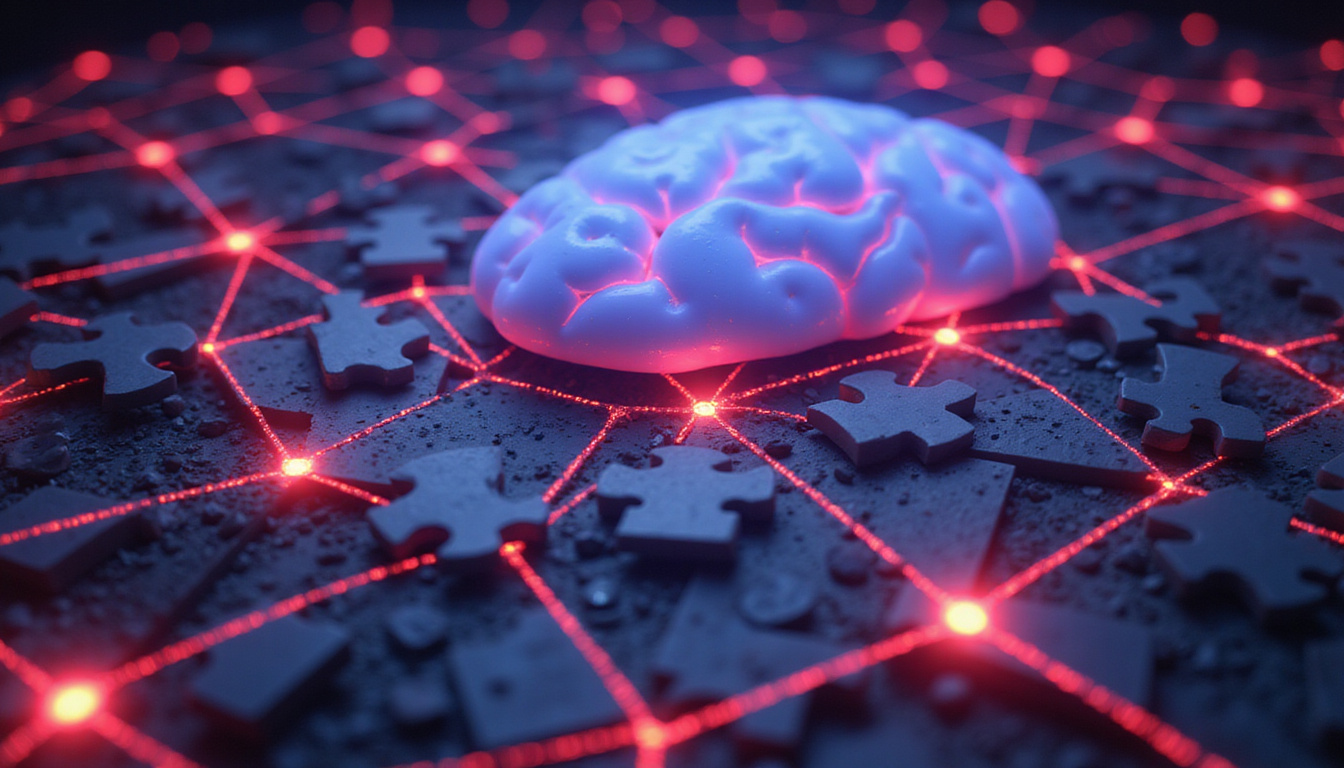

Inverse Reinforcement Learning Guide: How AI Learns Human Intentions
Inverse reinforcement learning is one of the most exciting ideas in modern AI because it focuses on why an agent acts, not just how it acts. Instead of hard‑coding rewards or goals, inverse reinforcement learning (IRL) tries to infer the hidden objectives that explain observed behavior. This is crucial for building AI systems that understand human intentions, align with our values, and behave safely in complex real‑world environments.
Below is a practical, people‑first guide to what IRL is, how it works, and why it matters for the future of AI.
What Is Inverse Reinforcement Learning?
To understand inverse reinforcement learning, it helps to contrast it with standard reinforcement learning (RL):
- Reinforcement learning: You specify a reward function (goals). The algorithm learns a policy (behavior) that maximizes that reward.
- Inverse reinforcement learning: You observe behavior (policy). The algorithm tries to infer the underlying reward function (goals or preferences) that could have produced that behavior.
Put differently:
RL: Rewards → Behavior
IRL: Behavior → Rewards
In IRL, we typically assume:
- There is an unknown reward function that guides the expert’s behavior.
- The expert behaves (roughly) optimally with respect to that reward.
- We can observe trajectories of the expert’s actions in different states.
- We then search for a reward function that makes that behavior “make sense.”
This is powerful because it lets AI learn latent human preferences from demonstrations instead of relying on hand‑tuned reward functions that may miss important nuances.
Core Concepts Behind Inverse Reinforcement Learning
States, Actions, Rewards, and Policies
Inverse reinforcement learning is usually framed in terms of Markov Decision Processes (MDPs):
- States (S): The different situations an agent can be in (e.g., positions on a road, game configurations, or UI screens).
- Actions (A): What the agent can do in each state (e.g., accelerate, brake, turn left).
- Transition dynamics (T): How actions change the state.
- Reward function (R): Numerical signal of how good each state or state‑action is.
- Policy (π): A mapping from states to actions—how the expert actually behaves.
In RL, you know R and seek π. In inverse reinforcement learning, you see π (from demonstrations) and try to infer R.
The Inverse Problem: Why It’s Hard
Inferring rewards from behavior is fundamentally underdetermined:
- Many different reward functions can explain the same behavior.
- Humans are not perfectly rational; their choices include noise, habits, biases, and errors.
- You usually only see behavior in a subset of all possible situations.
This creates an ill‑posed problem: multiple solutions fit the data.
Most IRL algorithms therefore introduce assumptions or priors, such as:
- The expert is (near) optimal.
- Rewards are “simple” or sparse.
- The learned reward should generalize to new states.
These constraints narrow the space of possible reward functions to those that best explain the expert’s choices.
How Inverse Reinforcement Learning Works in Practice
While there are many variants, most inverse reinforcement learning methods follow this rough loop:
-
Collect expert demonstrations
Gather trajectories of an expert acting in the environment: sequences of (state, action) pairs. -
Define feature representation
Instead of learning rewards over raw states, IRL often uses features: e.g., distance to goal, speed, lane position, number of pedestrians nearby. -
Propose a reward model
A common early approach: a linear reward function over features:
[
R(s) = w \cdot \phi(s)
] where ( \phi(s) ) is a feature vector and ( w ) are the weights to learn. -
Compare expert behavior to model behavior
For a proposed reward function, run RL to find the policy that would be optimal. Then compare this policy’s behavior to the expert’s. -
Adjust reward parameters
Modify the reward parameters ( w ) to reduce the gap between expert and model behavior. This is usually posed as a maximum‑likelihood or maximum‑margin optimization problem. -
Repeat until convergence
Iterate until the induced policy under the learned reward closely matches the expert’s demonstrations.
Modern approaches often swap linear rewards and tabular RL for:
- Neural network reward models (deep IRL)
- Differentiable planning modules
- Likelihood‑based models (e.g., maximum entropy IRL)
- Adversarial training frameworks, like GAIL (Generative Adversarial Imitation Learning)
Key Inverse Reinforcement Learning Algorithms
Maximum Margin IRL
One influential approach is maximum margin IRL, which aims to:
- Make the expert policy have higher expected reward than any alternative policy,
- With the largest possible margin.
Intuitively, it finds a reward where the expert’s behavior stands out clearly as better than other reasonable behaviors.
Maximum Entropy Inverse Reinforcement Learning
Maximum entropy IRL (MaxEnt IRL) assumes:
- The expert is stochastic but prefers higher‑reward trajectories.
- Among all distributions over trajectories that match the expert’s feature expectations, choose the one with maximum entropy (i.e., least additional assumptions).
This gives a probability distribution:
[
P(\tau) \propto e^{R(\tau)}
]
where ( \tau ) is a trajectory and ( R(\tau) ) is its total reward.
Benefits:
- Handles noise and suboptimality in expert behavior.
- Provides a principled probabilistic model of demonstrations.
Deep and Adversarial IRL (e.g., GAIL)
More recent methods connect inverse reinforcement learning with generative models:
- Deep IRL: Uses neural networks to represent reward functions, allowing learning from high‑dimensional inputs (e.g., images).
- GAIL (Generative Adversarial Imitation Learning): Frames imitation as a GAN‑like game:
- A generator (policy) tries to produce behavior indistinguishable from the expert’s.
- A discriminator tries to tell apart expert trajectories from generated ones.
- The discriminator’s output can be interpreted as a learned reward signal.
These methods scale better to complex tasks like robotic manipulation or driving.

For a more technical and historical overview of inverse reinforcement learning, Stuart Russell and Andrew Ng’s work is foundational (source: Stanford AI research).
Why Inverse Reinforcement Learning Matters for AI Safety and Alignment
From “Reward Hacking” to Learning True Intent
In standard RL, a poorly designed reward can lead to:
- Reward hacking: The agent finds loopholes—maximizing the numeric reward while violating the spirit of the task.
- Unintended side effects: The agent ignores safety or ethics not included in the reward.
Inverse reinforcement learning aims to reduce these issues by:
- Learning human‑like objective functions from demonstrations.
- Capturing implicit constraints (e.g., don’t endanger humans, drive smoothly) that people follow naturally.
Learning Human Values and Preferences
For AI to be truly aligned with humans, it must:
- Understand trade‑offs humans make (speed vs. safety, comfort vs. energy use).
- Respect norms and ethics that are hard to encode by hand.
- Adapt as preferences change over time or across cultures.
Inverse reinforcement learning provides a route to:
- Infer these value structures from observed human choices.
- Represent them as a reward function that can guide future AI behavior.
This is central to many proposals in AI alignment, where IRL or related preference learning techniques are used to extract values from behavior, ratings, or comparisons.
Real‑World Applications of Inverse Reinforcement Learning
1. Autonomous Driving
Self‑driving cars must match human driving norms:
- Maintain safe following distances.
- Smoothly merge, yield, and negotiate with other drivers.
- Obey not only traffic laws but also social conventions.
Using inverse reinforcement learning, a car can:
- Observe human drivers in varied scenarios.
- Infer a reward function that encodes preferences for comfort, safety, legality, and efficiency.
- Generalize to new roads and traffic conditions while staying aligned with human expectations.
2. Robotics and Human–Robot Interaction
Robots that work alongside people—assistive robots, warehouse robots, surgical robots—need to:
- Interpret what humans want.
- Avoid actions that are surprising, unsafe, or socially awkward.
Inverse reinforcement learning lets robots:
- Watch how experts perform tasks (e.g., assembling parts, handing objects).
- Learn both the task objective and safety constraints.
- Adapt their strategies to individual human preferences over time.
3. Personalized Recommendations and Interfaces
Digital assistants, recommender systems, and adaptive UIs can use IRL‑style techniques to:
- Infer user preferences from click patterns, navigation paths, and choices.
- Understand trade‑offs (e.g., diversity vs. familiarity in recommendations).
- Optimize for user satisfaction without needing an explicit, static reward definition.
4. Healthcare and Clinical Decision Support
Clinicians’ decisions encode subtle knowledge and value judgments:
- Balancing treatment effectiveness, side effects, patient preferences, and costs.
- Adjusting plans for special cases or comorbidities.
With inverse reinforcement learning, AI tools can:
- Learn a reward structure that explains expert clinical decisions.
- Suggest treatment plans aligned with expert reasoning.
- Surface the inferred trade‑offs for clinicians to inspect and adjust.
Benefits and Limitations of Inverse Reinforcement Learning
Benefits
- Less manual reward engineering: Avoids hand‑crafting complex reward functions.
- Richer understanding of behavior: Learns why an expert acts, not just what they do.
- Better generalization: A good reward function can guide behavior in novel situations.
- Path to value alignment: Offers a principled way to infer human intentions and norms.
Limitations and Challenges
- Data‑hungry: Needs high‑quality demonstrations that sufficiently cover the state space.
- Expert suboptimality: Humans make mistakes; naive IRL might learn “wrong” preferences.
- Ambiguity: Many reward functions can explain the same behavior; extra assumptions are needed.
- Computational cost: Repeatedly solving RL subproblems during training can be expensive.
- Distribution shift: If the environment changes too much, the learned reward might misgeneralize.
Because of these challenges, inverse reinforcement learning is often combined with:
- Active learning: Querying humans in informative states.
- Preference comparisons: Asking which of two trajectories is better.
- Regularization and priors: Encouraging simpler, more interpretable rewards.
Practical Steps to Experiment with Inverse Reinforcement Learning
If you want to explore inverse reinforcement learning hands‑on:
-
Start with a simple environment
- Gridworlds, basic navigation tasks, or classic control environments (e.g., OpenAI Gym).
-
Collect or script expert behavior
- Manually control an agent or script an “expert” policy.
-
Choose an IRL implementation
- Look for libraries or codebases that implement MaxEnt IRL, deep IRL, or GAIL.
- Many open‑source RL frameworks include imitation learning modules.
-
Inspect learned rewards
- Visualize reward maps (e.g., heatmaps in gridworlds).
- Check whether high‑reward states match your intuitive understanding of the task.
-
Test generalization
- Modify the environment slightly (different obstacles, start positions).
- See if the policy derived from the learned reward still behaves sensibly.
FAQ: Common Questions About Inverse Reinforcement Learning
1. How is inverse reinforcement learning different from imitation learning?
Imitation learning often tries to directly learn a policy that mimics expert actions (e.g., supervised learning on state → action pairs). In contrast, inverse reinforcement learning first infers a reward function that explains the expert’s behavior, then derives a policy by optimizing that reward. IRL is more computationally expensive but often generalizes better to new situations because it captures underlying goals, not just surface‑level actions.
2. When should I use inverse RL instead of standard reinforcement learning?
Use standard RL when you can define a clear, reliable reward function (e.g., win/loss in a game, distance to goal). Use inverse reinforcement learning when:
- Goals are hard to specify in code.
- You have access to expert demonstrations.
- You care about learning intentions, values, or preferences, not just task performance.
3. Can inverse reinforcement learning fully capture human values?
No current method, including inverse reinforcement learning, can perfectly capture the full complexity of human values. IRL can approximate local preferences and trade‑offs in specific domains (e.g., driving style, clinical treatment choices). For broader value alignment, IRL is one tool among many, often combined with preference learning, interpretability methods, and human feedback loops.
Bringing It All Together: Use IRL to Build AI That Understands You
Inverse reinforcement learning shifts AI from obeying explicit reward signals to understanding the goals those signals are supposed to represent. By watching how humans act, IRL systems can infer hidden objectives, preferences, and constraints—essential ingredients for trustworthy, aligned AI.
If you’re designing AI for safety‑critical or human‑centric applications—autonomous vehicles, assistive robots, decision support tools—consider incorporating inverse reinforcement learning:
- Gather expert demonstrations in realistic scenarios.
- Use IRL to infer the reward structure behind those behaviors.
- Validate, inspect, and refine those learned rewards with domain experts.
Start small: experiment with simple environments, then scale up as you gain intuition. By investing in inverse reinforcement learning today, you help build a future where AI systems don’t just act intelligently—they act in line with human intentions.