Situated agents are rapidly becoming one of the most important ideas in modern AI, bridging the gap between abstract intelligence and real-world, context-aware behavior. Unlike traditional systems that only process text or fixed datasets, situated agents exist within an environment—physical or virtual—and continuously sense, reason, and act within it. This shift from static models to interactive, environment-aware systems is transforming everything from robotics and smart homes to industrial automation and personal digital assistants.
In this article, you’ll learn what situated agents are, how they work, why they matter for real-world AI, and how they’re being used today.
What are situated agents?
At a high level, situated agents are AI systems that:
- Exist within a specific environment (real or simulated)
- Continuously perceive that environment through sensors or data streams
- Maintain an internal state or memory about the world and themselves
- Take actions that change the environment or their own situation
- Adapt their behavior based on feedback and evolving context
This “situatedness” means the agent isn’t just analyzing data from afar; it is actively embedded in the domain it operates in. A robot navigating a warehouse, a household assistant coordinating smart devices, or a trading bot reacting to live market feeds can all be examples of situated agents.
The key distinction: instead of simply mapping input to output (e.g., a question to an answer), a situated agent is constantly in a loop:
- Perceive
- Interpret
- Decide
- Act
- Learn and update state
This perception–action loop is what lets these systems be context aware, adaptive, and useful in messy real-world settings.
Why situated agents matter for real-world AI
Traditional AI excels in controlled, well-defined tasks: classifying images, translating sentences, or answering questions about static knowledge. But the real world is:
- Dynamic (things change)
- Noisy (data is imperfect)
- Partially observable (you never see everything)
- Multi-agent (other people or systems are acting too)
Situated agents are designed for this kind of complexity. They bring three critical advantages:
1. True context awareness
Because they remain in continuous interaction with their environment, situated agents maintain a rich, evolving model of context:
- Where they are (location, role, current task)
- What’s happening (events, anomalies, user intent)
- What just happened (short-term memory, recent state)
- What tends to happen (long-term patterns and policies)
Rather than treating each request or input as isolated, a situated agent connects it to an unfolding situation. For example, a home assistant that’s a situated agent won’t just answer “Is the door locked?”—it will know:
- It saw the door unlock 5 minutes ago
- Motion was detected near the entry
- The homeowner’s phone is currently outside geofence
That context dramatically changes what a “smart” answer or action looks like.
2. Better decision-making under uncertainty
Real environments are full of unknowns and imperfect data. Situated agents use:
- Probabilistic reasoning
- World models and simulations
- Ongoing feedback from sensors
to make robust decisions even when they don’t have complete information. They can monitor outcomes over time and refine strategies, instead of relying on one-shot predictions.
3. Closed-loop intelligence
The biggest limitation of many AI tools today is that they’re open loop: they generate an answer or recommendation and stop. Situated agents close that loop:
- They act on the world (trigger a robot, send a command, change a configuration)
- They observe the results (success/failure, new sensor data)
- They update their models and policies accordingly
This makes them ideal for automation and autonomy: instead of asking, “What should I do?” you can delegate a whole process to a situated agent and let it handle the continuous execution and adjustment.
Key components of a situated agent
To understand how situated agents work, it helps to look at their core building blocks. While implementations vary, most share these components:
1. Perception and sensing
Situated agents need to “see” their environment. Depending on the domain, this can include:
- Physical sensors: cameras, LiDAR, microphones, temperature, pressure, GPS
- Digital sensors: API responses, logs, streaming telemetry, user interaction events
- Hybrid inputs: device telemetry plus user language input
Perception often involves multiple layers of processing: for instance, computer vision to detect objects in a camera feed or natural language understanding to interpret user commands.
2. State and memory
An agent’s internal state tracks what it knows and believes about the world and itself. This typically includes:
- Short-term state: current observations, most recent actions, task progress
- Long-term state: maps of a building, user preferences, learned policies
- Goals and constraints: what it is trying to achieve, and what is allowed
Without state and memory, the agent can’t truly be context aware—it would simply react to each observation in isolation.
3. Reasoning and planning
The reasoning layer decides what to do next, given current state and goals. This may include:
- Rule-based systems (if-then logic, safety constraints)
- Classical planning (searching over sequences of actions)
- Reinforcement learning (learning a policy from reward signals)
- Language model–driven reasoning (LLMs generating strategies or plans)
Many modern situated agents combine symbolic reasoning (explicit rules) with learned models (neural networks) to balance reliability and flexibility.
4. Action and actuation
Actions are how situated agents affect their environment:
- Physical actions: moving a robot arm, navigating a drone, adjusting machinery
- Digital actions: calling APIs, updating databases, sending messages, triggering workflows
- Hybrid actions: like a warehouse robot updating inventory systems while moving items
The quality of actuation—precision, latency, reliability—strongly affects overall system performance.
5. Learning and adaptation
Over time, situated agents can learn to do better:
- Tuning policies based on rewards and penalties
- Updating world models as environments change
- Personalizing behavior for specific users or contexts
This data-driven adaptation is critical for environments that are not static (which is most real environments).

Examples of situated agents in real environments
Situated agents are already widely deployed, often behind the scenes.
Robotics and autonomous systems
Robots are classic examples of situated agents:
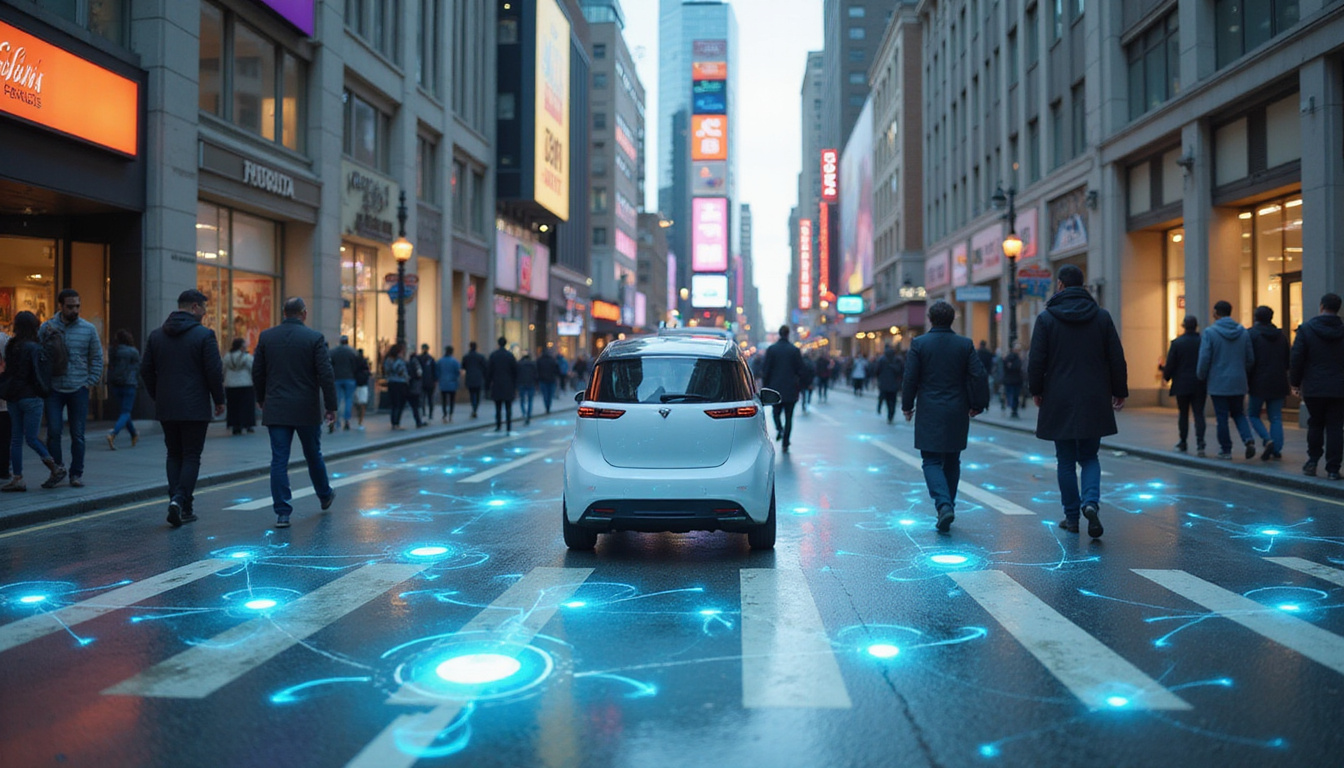
- Autonomous vehicles continuously sense road conditions, traffic, and pedestrians, then reason about speed, lane changes, and braking.
- Warehouse robots navigate aisles, detect obstacles, and coordinate with other robots to fulfill orders efficiently.
- Service robots in hospitals or hotels adapt routes and behavior based on human presence and changing tasks.
These systems must react in real time and handle edge cases, making situated intelligence essential.
Smart homes and buildings
In smart environments, agents coordinate devices and services:
- Adjusting heating and lighting based on occupancy, time, and user preferences
- Detecting anomalies like water leaks or unusual motion and responding proactively
- Managing energy consumption by predicting usage patterns and optimizing appliances
Here, situated agents blend sensor data, user commands, and learned routines to act as an intelligent control layer over the environment.
Industrial and IoT applications
In factories, power plants, and infrastructure, situated agents:
- Monitor sensor networks for early signs of failure
- Adjust process parameters to maintain quality and efficiency
- Schedule maintenance dynamically based on actual usage, not fixed intervals
These applications often fall under “industrial AI” or “cyber-physical systems” and are increasingly safety-critical. Research on situated and embodied AI from leading labs like MIT CSAIL and Stanford emphasizes this close connection between AI, environment, and hardware (source: MIT CSAIL – Embodied Intelligence).
Digital-only environments
Situated agents don’t have to be physical. In purely digital domains:
- Trading bots operate within financial markets, reacting to live data streams and order book changes.
- Game agents adapt to players, environments, and narrative events in real time.
- Operational copilots for SREs or DevOps monitor logs, metrics, and incidents, then trigger playbooks or remediation actions.
The “environment” here is defined by APIs, data streams, and system states rather than physical sensors.
How situated agents differ from traditional AI tools
It’s easy to confuse a chatbot or a predictive model with a situated agent, but there are critical differences.
Static vs. dynamic interaction
- Traditional AI: one-off queries or batch jobs
- Situated agents: ongoing interaction with a specific environment
No memory vs. stateful behavior
- Traditional AI: often stateless beyond a single session or input
- Situated agents: maintain a long-lived memory and state about the world and their role in it
Recommendations vs. direct action
- Traditional AI: suggests what a human should do
- Situated agents: execute actions themselves, turning suggestions into operations
Isolated vs. embedded
- Traditional AI: often runs detached from execution systems
- Situated agents: embedded into workflows, robots, or infrastructure with tight feedback loops
Designing effective situated agents
Building useful situated agents involves both technical and human-centered design considerations.
Understand the environment deeply
Before building, you need a clear map of:
- What sensors and data are available
- What actions the agent can take
- What constraints exist (safety, legal, operational)
- How humans currently operate in that environment
Misunderstanding the environment is one of the fastest ways to build an agent that is brittle or unsafe.
Define precise goals and boundaries
Situated agents should have:
- Clear objectives (e.g., minimize energy usage subject to comfort constraints)
- Explicit safety and ethics rules (what they must never do)
- Well-defined scopes (what’s in-bounds and what’s not)
Ambiguous goals lead to unpredictable or misaligned behavior, especially in complex environments.
Balance autonomy and human oversight
Most real-world deployments blend:
- Routine, low-risk tasks handled entirely by the agent
- Higher-risk tasks that require human approval
- Transparent logs and explanations so humans can audit decisions
This “human-in-the-loop” approach is key to building trust and meeting regulatory expectations.
Plan for monitoring and iteration
Once deployed, situated agents need:
- Continuous monitoring of behavior and outcomes
- Tools to roll back or adjust policies rapidly
- Mechanisms for learning from failures and near misses
A situated agent is not “done” at launch; it’s a living system that must evolve with its environment.
FAQ about situated agents and context-aware AI
Q1: What are AI situated agents in simple terms?
AI situated agents are intelligent systems that live inside a specific environment—like a building, factory, vehicle, or digital platform—constantly sensing what’s happening and taking actions in response. Unlike basic bots that only answer questions, situated agents have memory, context, and the ability to change the world they operate in.
Q2: How are context aware agents different from regular chatbots?
Context aware agents track ongoing state: what happened earlier, what the user wants over time, and what’s happening in surrounding systems or devices. Regular chatbots usually treat each message separately. Situated agents use that context to make smarter, more reliable decisions, and often act through APIs or robots rather than just sending text replies.
Q3: Where are situated AI agents used today?
Situated AI agents are used in robotics (autonomous vehicles, warehouse robots), smart homes and offices, industrial IoT systems, customer operations centers, and even in games and simulations. Anywhere an AI must continuously perceive, decide, and act within a specific environment, situated agent architectures are increasingly the standard choice.
Bringing situated agents into your organization
The shift from static AI tools to truly situated agents is reshaping how businesses and institutions operate. Instead of just getting predictions or text outputs, you can deploy agents that:
- Understand your unique environment and constraints
- Maintain rich, evolving context over time
- Take direct actions to automate complex workflows
- Learn and improve as conditions change
If you’re exploring how to make your AI systems more context aware and effective in real-world settings—whether that’s a physical facility, a digital platform, or a hybrid of both—now is the time to start designing and piloting situated agents. Begin with one critical environment, map the perception–decision–action loop, and prototype an embedded agent that can close that loop safely.
From there, you can scale to a network of coordinated situated agents that turn your data, devices, and processes into a truly intelligent environment.